Cataracts are one of the common causes of vision problems, especially in older adults. Cataracts develop when the natural lens inside the eye becomes cloudy, which makes it hard for light to pass through clearly. Because of this, vision can gradually become blurred, dull or less sharp.
Cataracts usually grow slowly, so the early changes in vision can be easy to overlook. Some people may initially notice difficulty reading small text, driving at night, or seeing clearly in bright sunlight. Spotting the signs of cataracts helps you know when to get your eyes checked. It also helps you learn what treatments you can choose from.
A cataract means the eyes own lens gets cloudy. Normally that lens is clear. It focuses light on the retina so you can see things sharply. When proteins inside the lens break down and accumulate, the lens gradually becomes cloudy.
Cataracts commonly develop as part of the ageing process, but they can also occur due to eye injuries, certain medical conditions, long-term use of specific medications, or other factors. They may affect one or both eyes, and the progression can vary from person to person.
Cataract symptoms often develop gradually. In the early stages, the changes might be mild. As the clouding gets worse, they become more obvious.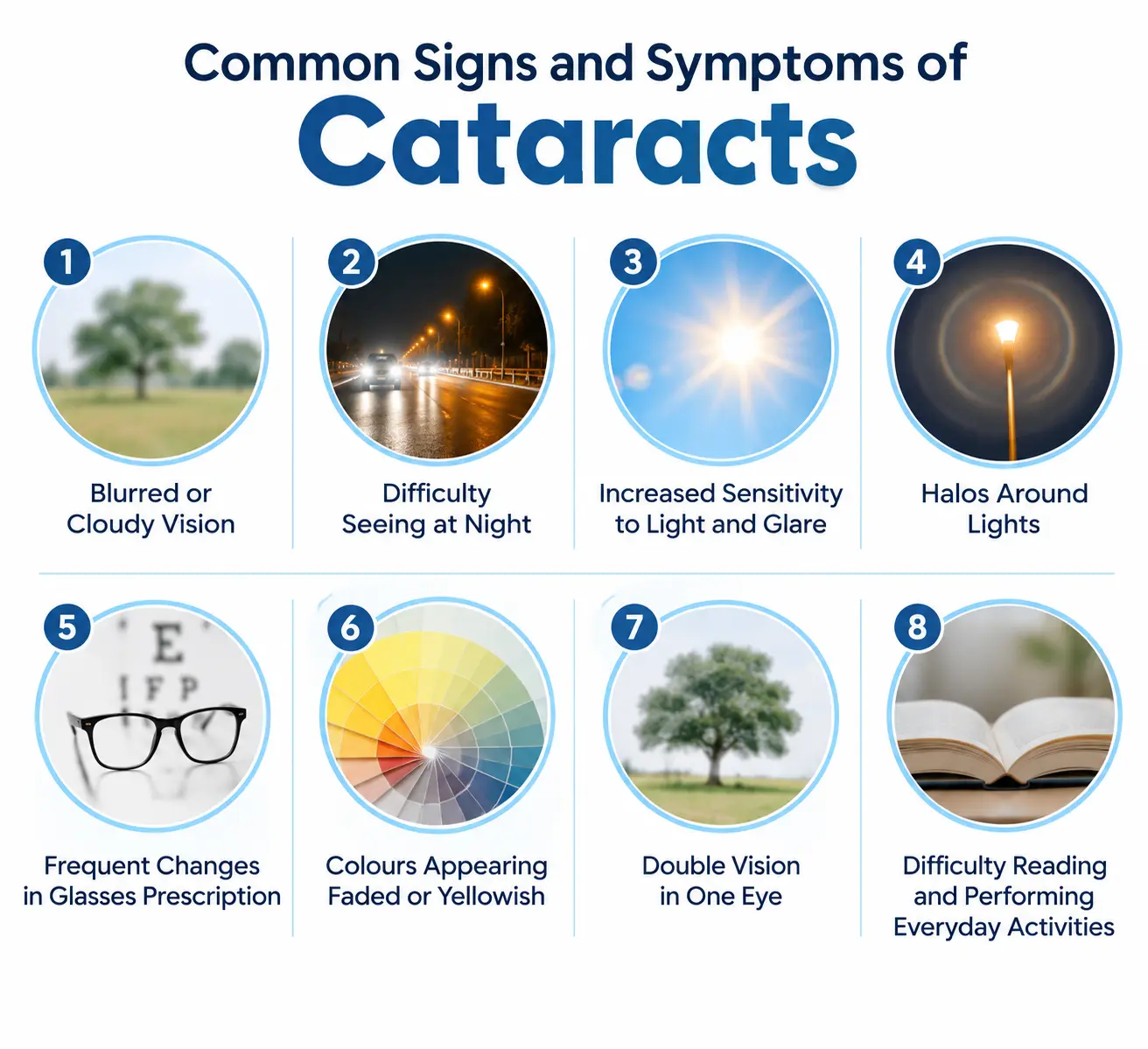
One of the most common signs of cataracts is blurred or cloudy vision. Things may look out of focus, like you are staring through a window or a dirty glass. You may find it difficult to read, recognise faces from a distance, or see fine details. Updating your glasses prescription may provide temporary improvement in some cases, but the blurriness can continue as the cataract progresses.
Cataracts can make it tough to see well when the light is dim. You might find that driving after dark feels harder. You may need stronger lamps just to read and do your daily tasks. Headlights from oncoming vehicles may also appear unusually bright, making night driving uncomfortable.
Being extra bothered by lights is another sign you may notice. Sunlight, vehicle headlights, and indoor lighting may appear uncomfortable or unusually intense. Strong light can get in the way of things like driving, reading and being outside. This happens because the cloudy lens scatters light instead of allowing it to pass through clearly.
Some people who have cataracts see circles or rings around lights and this is often worse at night. These are known as halos. You might notice them around street lamps, car headlights or other bright things. These halos can make it hard to tell how away something is. They can also make it tough to see clearly in some kinds of light.
If you find yourself changing your glasses prescription more frequently than usual, it may be worth getting your eyes examined. Cataracts can change the way light passes through the lens, which then changes how clearly you see. Although a new prescription may temporarily improve vision, the prescription might still miss the cataract.
Cataracts can affect how you perceive colours. White objects may begin to look yellowish, while other colours may appear dull or less vibrant. This change can happen gradually, making it difficult to notice until you compare your vision with how things used to look.
Some people with cataracts may see notice ghost images in the eye that is affected. An object may appear duplicated or have a faint shadow beside it. This happens because the cloudy lens messes with how light gets into the eye.. Double vision can come from other issues too. It's important to get it checked by an eye specialist to find the cause.
As cataracts get worse, simple tasks like reading or driving can start to feel harder. You might need brighter lighting to read, struggle to recognise faces, or find it harder to use a phone or computer. These changes can slowly impact how independent a person feels and how comfortable they are in their life, especially when vision gets very cloudy.
Ageing is the number one reason for cataracts.. Other things can also raise the chance of getting them.
Some common causes and risk factors include:
Cataracts can sometimes develop in younger adults and children as well, although they are more commonly associated with ageing.
Cataracts tend to sneak up on you little by little. Still, you should not shrug off any shift in how you see. Consider scheduling an eye examination if you experience:
Getting your eyes checked can show if cataracts are behind what you're feeling or if something else with your eyes is changing how you see.
Important: Sudden vision loss, severe eye pain, a red eye, or sudden double vision should not automatically be attributed to cataracts. These symptoms require urgent medical assessment.
An eye specialist can identify cataracts through a comprehensive eye examination. The assessment may include:
Visual acuity test: This checks how clearly you can see letters, numbers, or objects at different distances.
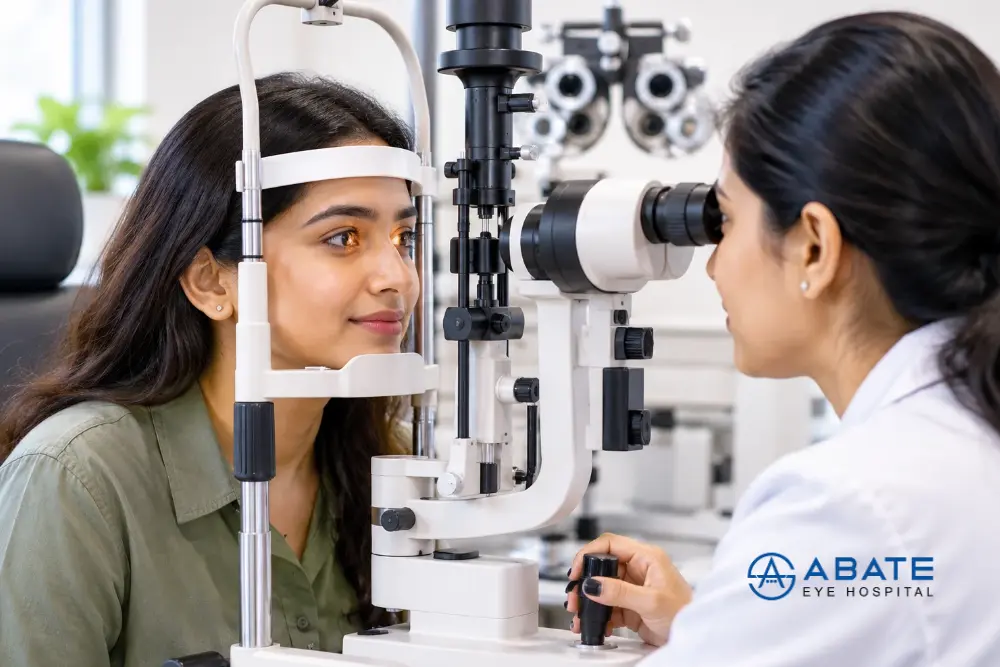
Slit-lamp examination: A specialised microscope helps the eye specialist examine the front structures of the eye, including the natural lens, and identify signs of clouding.
Retinal examination: The doctor examines the retina and other structures at the back of the eye to assess overall eye health.
Eye pressure measurement: This test checks the pressure inside the eye and helps identify other possible eye conditions.
These examinations help determine the presence and extent of cataracts and whether treatment is necessary.
Yes. Cataracts can be treated effectively with surgery. However, surgery may not be necessary immediately after diagnosis. If the cataract is mild and does not significantly affect daily activities, the eye specialist may recommend monitoring it through regular examinations.
When cataracts begin to interfere with reading, driving, working, or other everyday activities, surgery may be recommended. You can also read the blog on whether cataracts can be removed without surgery.
Cataract surgery involves removing the cloudy natural lens and replacing it with an artificial intraocular lens (IOL). The procedure is commonly performed using modern surgical techniques and is generally safe for suitable patients.
The choice of intraocular lens depends on several factors, including eye health, visual requirements, and the patient's expectations. Early diagnosis and timely treatment planning can help patients understand their options and make informed decisions about their eye health.
There is no guaranteed way to prevent age-related cataracts. However, certain habits may help support overall eye health and reduce some risk factors.
These measures support general eye health, but they cannot guarantee that cataracts will not develop.
Recognising cataract symptoms early can help you understand changes in your vision and seek appropriate care. If you are experiencing blurred vision, glare, difficulty driving at night, or other changes in eyesight, a comprehensive eye examination can help identify the cause. At Abate Eye Hospital, patients receive specialised eye care and guidance based on their individual vision needs. At Abate, we provide advanced cataract treatment in Chennai, Perinthalmanna, Calicut, and Kannur.
An experienced eye specialist in Chennai, Perinthalmanna, Calicut and Kannur at Abate can assess the condition of your natural lens, evaluate your overall eye health, and recommend suitable treatment when needed. With timely diagnosis and appropriate care, cataracts can be managed effectively.
The early signs of cataracts commonly include blurred or cloudy vision, increased sensitivity to light, difficulty seeing at night, and colours appearing less vibrant. These symptoms usually develop gradually.
Cataracts generally cause gradual changes in vision rather than sudden vision loss. Sudden loss of vision may indicate another serious eye condition and requires urgent medical attention.
Cataracts are more common after the age of 60, but they can develop earlier. Factors such as diabetes, eye injuries, medication use, and family history may contribute to earlier development.
Currently, there are no proven eye drops, medicines, or natural remedies that can remove an existing cataract. Surgery is the established treatment when cataracts significantly affect vision and daily activities.
Cataracts are generally painless. They usually cause gradual vision changes, such as blurriness, glare, and difficulty seeing clearly. Eye pain or redness should be assessed separately by an eye specialist.
Yes. Cataracts can develop in one eye or both eyes. They may progress at different rates, so one eye can have more significant vision changes than the other.
Cataract surgery may be recommended when vision problems begin to interfere with daily activities such as reading, driving, working, or recognising faces. An eye specialist can assess the cataract and discuss whether surgery is appropriate.