Many people wonder why vision problems seem to run in families. If parents or close relatives wear glasses or have eye diseases, it’s natural to question whether the same issues will appear in the next generation. The short answer is: yes, many eyesight problems can be hereditary, but genetics is only one part of the story. Lifestyle, environment, and regular eye care also play major roles in long-term eye health.
Understanding which eye conditions are inherited, how genetic risks work, and when to seek professional evaluation can help protect vision for years to come.
Genes carry instructions that shape eye development, corneal structure, lens clarity, retina function, and even tear production. Certain genetic variations can affect how the eye forms or how it responds to ageing. When these traits pass from parents to children, the likelihood of developing specific eye conditions increases.
However, hereditary risk does not always mean a condition will definitely occur. It simply indicates a higher probability, which can often be managed with early diagnosis and proper care.
Several common vision issues have a strong genetic link.
Myopia frequently runs in families. Children with one or both parents who are near-sighted have a higher chance of developing myopia, especially during school-age years. Increased screen time and limited outdoor activity can further influence its progression.
Hyperopia can also be inherited. Some children are born with shorter eye lengths that affect near vision. In mild cases, the condition may correct naturally as the eye grows, while stronger prescriptions may persist.
Astigmatism often appears in families. It results from an irregular corneal shape, and genetics plays a major role in determining corneal curvature.
Colour blindness is one of the most well-known hereditary eye conditions. It is commonly passed through the X chromosome and affects males more frequently than females.
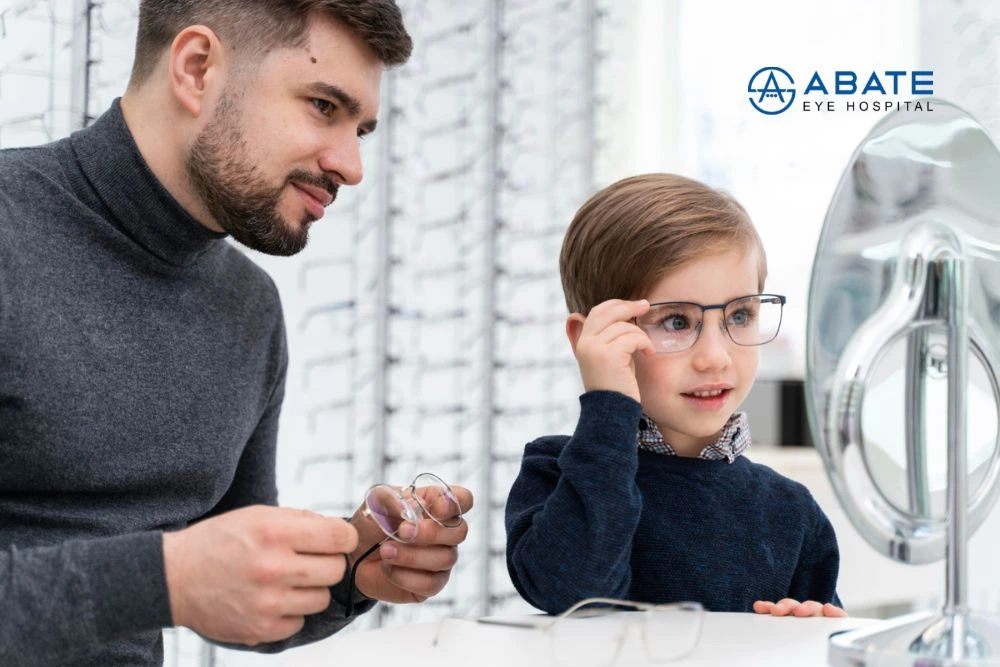
Both amblyopia and strabismus have hereditary tendencies. Early childhood screening is essential to detect and correct these conditions before they affect long-term vision.
In addition to refractive errors, several serious eye diseases have genetic links.
Certain types of glaucoma run in families. Individuals with a family history of glaucoma have a higher risk and should undergo regular eye pressure and optic nerve checks.
While age-related cataracts are common, some people inherit a tendency to develop cataracts earlier in life. Congenital cataracts can also be present at birth due to genetic factors.
Inherited retinal conditions such as retinitis pigmentosa and macular dystrophies can lead to progressive vision loss. Genetic counselling and early diagnosis help in managing these conditions.
Keratoconus, a condition where the cornea becomes thin and cone-shaped, often has a familial link. Early detection can help slow progression and preserve vision.
Not all eye problems are genetic. Many vision issues develop due to:
This is why even individuals without a family history of eye conditions should have routine eye examinations.
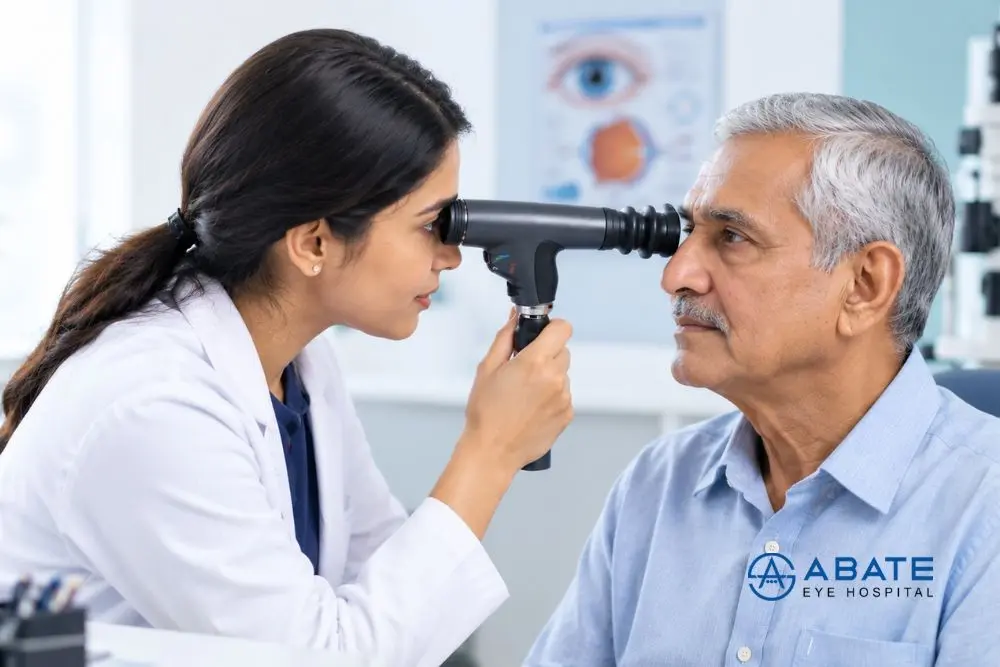
Early diagnosis is the most effective way to manage hereditary eye conditions. Regular eye check-ups allow ophthalmologists to identify subtle changes before symptoms become noticeable. Pediatric vision screening is especially important for children with a family history of eye disorders.
At Abate Eye Hospital, comprehensive eye evaluations, advanced imaging systems, and specialised pediatric eye care services help detect inherited eye conditions at the earliest stages, ensuring better treatment outcomes. At Abate, we have the best pediatric ophthalmologist in Chennai and Kerala.
While genes cannot be changed, proactive steps can reduce the impact of inherited risks.
Early detection remains the most effective way to manage hereditary eye conditions.
If a parent or close relative has a known eye disease, other family members should undergo periodic eye evaluations. Pediatric eye screening is especially important for children with a family history of refractive errors, squint, or retinal disorders.
Managing hereditary eye conditions requires experienced ophthalmologists and advanced diagnostic technology. Specialised eye hospitals offer:
Early diagnosis and expert guidance significantly improve treatment outcomes.
Managing hereditary eye conditions requires experienced specialists and advanced diagnostic support. Abate Eye Hospital in Kerala and Chennai, offers:
Skilled ophthalmologists across subspecialties
Advanced diagnostic and imaging technology
Pediatric and adult genetic eye screening
Personalised treatment planning
Long-term follow-up care
This integrated approach ensures patients receive accurate diagnosis, early intervention, and continuous care for inherited eye conditions.
Eyesight problems can indeed be hereditary, but genetic risk does not guarantee vision loss. With early screening, proper eye care, and professional guidance, many inherited eye conditions can be effectively managed or corrected.
Regular eye check-ups and awareness of family medical history are the best tools for protecting vision across generations. Abate Eye Hospital remains committed to preserving and improving vision across generations by combining medical expertise, modern technology, and patient-centred care in Kerala and Chennai.