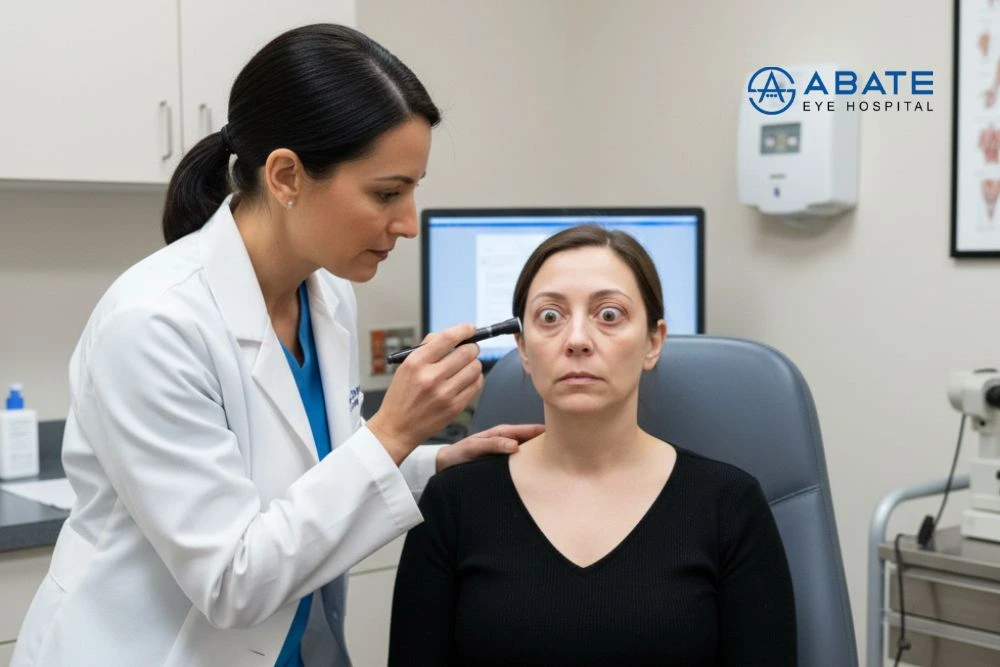
Thyroid Eye Disease (TED), also known as Graves’ ophthalmopathy, is a complex autoimmune condition that affects the eyes and surrounding tissues. It is commonly associated with thyroid disorders, especially hyperthyroidism, but can also occur in patients with normal or low thyroid levels. Early diagnosis and timely treatment of thyroid eye disease are essential to protect vision, relieve discomfort, and restore eye appearance.
With advances in ophthalmology and oculoplastic care, thyroid eye disease treatment today focuses not only on controlling symptoms but also on improving long-term eye health and quality of life.
Thyroid Eye Disease is an inflammatory condition in which the immune system mistakenly attacks the muscles, fat, and connective tissues around the eyes. This immune response leads to swelling, redness, and tissue expansion within the eye socket, causing the eyes to protrude or become misaligned.
The condition usually develops in people with Graves’ disease but may also be seen in patients with other thyroid disorders or even those without obvious thyroid imbalance.
Symptoms can range from mild irritation to severe vision-threatening complications. The most common signs include:
Symptoms often affect both eyes but may be asymmetrical in severity. You can also read our blog on thyroid effect on eyes.
Thyroid eye disease typically progresses through two stages:
This phase can last several months to two years. Inflammation is ongoing, and symptoms may worsen over time. Treatment during this stage focuses on controlling inflammation and preventing complications.
Inflammation subsides, and the condition stabilizes. Residual changes such as bulging eyes, eyelid retraction, or double vision may persist. Surgical treatments are usually planned during this phase.
Understanding the stage of the disease is critical in choosing the right treatment approach.
Accurate diagnosis involves a detailed eye examination and evaluation of thyroid function. Common diagnostic steps include:
Early diagnosis allows for better disease control and improved treatment outcomes.
Treatment for thyroid eye disease is highly individualized and depends on the severity, stage of the disease, and symptoms experienced by the patient.
Maintaining stable thyroid hormone levels is a critical part of treatment. Patients are advised to work closely with an endocrinologist to manage hyperthyroidism or hypothyroidism effectively.
For mild symptoms, treatment may include:
These measures help relieve discomfort and protect the surface of the eyes.
Steroids are often used during the active phase to reduce inflammation and swelling around the eyes. They may be given orally or intravenously, depending on disease severity.
In selected cases, newer medications that target the immune response may be recommended to control inflammation more effectively and reduce disease progression.
Orbital radiotherapy may be used in moderate to severe cases, particularly when eye movement is affected. It helps reduce inflammation in the eye muscles and is often combined with medical therapy.
Surgery is usually considered once the disease has entered the inactive phase or earlier if vision is threatened.
This procedure creates more space within the eye socket by removing bone or fat, allowing the eye to move back into a more natural position. It is recommended for patients with severe bulging eyes or optic nerve compression.
If double vision persists due to misaligned eye muscles, corrective surgery can help restore proper alignment and improve visual comfort.
Eyelid retraction and incomplete eye closure can be corrected through eyelid surgery, improving both eye protection and cosmetic appearance.
Thyroid eye disease requires a coordinated approach involving ophthalmologists, oculoplasty specialists, and endocrinologists. This team-based care ensures that both eye-related and thyroid-related aspects of the condition are managed effectively.
At advanced eye care centers like Abate Eye Hospital, patients benefit from integrated care using modern diagnostic tools, experienced specialists, and personalized treatment plans.
Certain lifestyle modifications can significantly improve treatment outcomes:
These measures help slow disease progression and support recovery.
The long-term outlook for thyroid eye disease has improved significantly with modern treatment options. While some patients experience complete symptom resolution, others may have residual changes that can be effectively managed with surgical correction.
Early intervention, regular follow-ups, and expert care play a vital role in preserving vision and achieving satisfactory cosmetic results.
Immediate medical care is necessary if a patient experiences:
Prompt treatment can prevent permanent vision damage.
Abate Eye Hospital, best eye care hospital Kannur, Calicut, Malappuram and Chennai provides comprehensive evaluation and treatment for thyroid eye disease, combining clinical expertise with advanced technology. With experienced ophthalmologists and oculoplasty specialists, patients receive personalized care focused on both functional vision and facial harmony. The hospital’s patient-centric approach ensures safe, effective, and affordable treatment for complex eye conditions.
Thyroid eye disease is a challenging condition, but with timely diagnosis and appropriate treatment, its impact on vision and appearance can be significantly reduced. Advances in medical therapy and surgical techniques have made it possible to manage even severe cases successfully. Choosing an experienced eye care centre and following a structured treatment plan are key steps toward long-term eye health and improved quality of life.

Oct 19, 2026

Oct 17, 2026