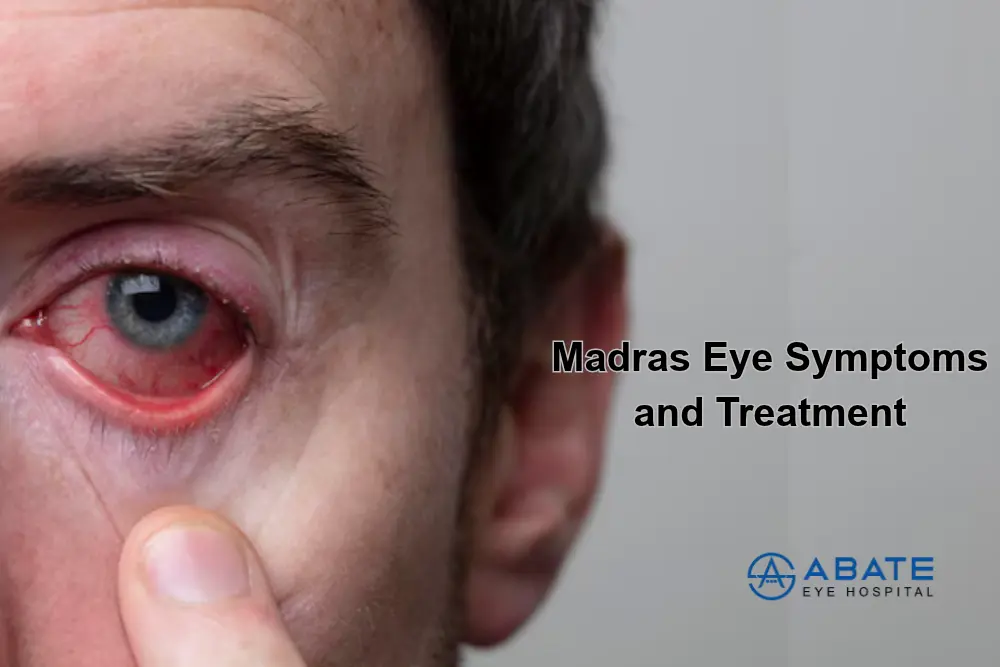
Madras Eye, commonly known as conjunctivitis, is a contagious eye condition that causes redness, irritation, watering, and sometimes discharge. It can spread quickly, particularly in places where people live, study, or work close together. In Chennai, cases of Madras Eye are often a seasonal concern, especially during periods of increased humidity, rainfall, and changing weather conditions.
Although Madras Eye is usually temporary, it can cause considerable discomfort and may spread from one person to another through infected eye secretions, contaminated hands, and shared personal items. Knowing its symptoms, causes, treatment options, and preventive measures can help reduce its spread. This blog explains how to identify Madras Eye, why it tends to spread in Chennai during certain seasons, and when to consult an eye specialist.
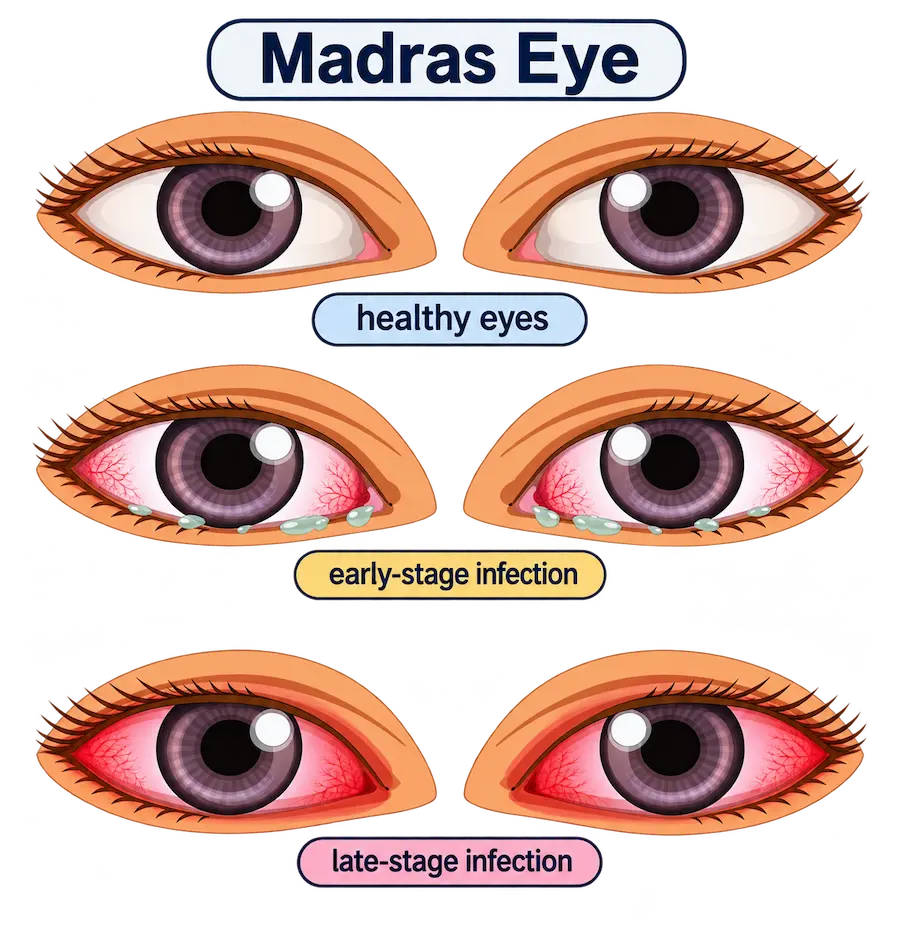
Madras Eye is the common name for conjunctivitis, an inflammation of the conjunctiva, the thin, transparent membrane covering the white part of the eye and the inner surface of the eyelids. It can be caused by viruses, bacteria, allergens, or irritants. Viral conjunctivitis is a common cause of infectious Madras Eye and can spread easily between people. The condition may affect one eye initially and later spread to the other. While many cases improve without specific medication, the right treatment depends on the underlying cause.
Madras Eye symptoms can appear suddenly or develop over a short period. The severity may vary depending on the cause.
Red or pink eyes are among the most noticeable symptoms of Madras Eye. The small blood vessels in the conjunctiva become inflamed, making the white part of the eye appear pink or red.
Excessive watering is common, particularly in viral conjunctivitis. The eyes may produce clear, watery discharge throughout the day, making it uncomfortable to read, work, or use digital devices.
People with Madras Eye may experience itching, irritation, or a persistent uncomfortable sensation. Rubbing the eyes can make the irritation worse and may transfer infection to the other eye or another person.
Inflammation can cause the eyelids to become slightly swollen. Some people may notice puffiness around the eyes, especially after waking up.
A watery discharge is common in viral conjunctivitis, while bacterial conjunctivitis may cause thicker yellow or green discharge. This discharge can collect around the eyelids and cause them to stick together after sleeping.
The eyes may feel as though there is dust or sand inside them. A burning sensation or mild discomfort can also occur, particularly when blinking.
Some people experience mild sensitivity to bright light. However, significant light sensitivity, especially when accompanied by eye pain or blurred vision, should be assessed promptly by an eye specialist.
Madras Eye can occur throughout the year, but cases may increase during certain weather conditions and seasonal periods. Chennai's climate, population density, travel patterns, and everyday contact between people can contribute to the spread of conjunctivitis.
Chennai experiences hot and humid weather for much of the year, along with periods of seasonal rainfall. Changes in temperature, humidity, and rainfall can coincide with increases in viral and other respiratory infections.
During the monsoon and post-monsoon periods, people may spend more time in enclosed spaces, increasing opportunities for close contact. However, weather alone does not cause Madras Eye. The infection spreads when people come into contact with the virus or bacteria responsible for conjunctivitis.
Schools, colleges, tuition centres, and other educational institutions bring many people together in shared environments. Children may touch their eyes frequently and share stationery, toys, towels, or other items. If an infected student attends classes, the infection can spread through contaminated hands and frequently touched surfaces.
Chennai has busy public transport systems, markets, offices, shopping areas, and other crowded spaces. People frequently touch shared surfaces such as handrails, door handles, and seats. If someone touches an infected eye and then contaminates a surface, another person may pick up the infection by touching that surface and then touching their own eyes.
Touching or rubbing the eyes without washing hands is one of the important ways infectious conjunctivitis spreads. Sharing towels, handkerchiefs, pillowcases, cosmetics, or eye-care products can also increase the risk of transmission.
Some people continue attending school, college, or work even after developing redness and watering in their eyes. They may mistake the symptoms for ordinary irritation or allergies. When the condition is infectious, close contact with others can increase the possibility of transmission.
Infectious conjunctivitis spreads mainly through contact with infected eye secretions. The infection can pass from one person to another in several ways:
One important point: Madras Eye does not spread simply by looking at an infected person. Direct contact with infected secretions or contaminated hands and objects is the main concern.
The treatment for Madras Eye depends on whether the condition is caused by a virus, bacteria, an allergy, or an irritant. An eye specialist can examine the eyes and recommend suitable treatment.
Viral conjunctivitis is a common cause of Madras Eye. Most cases improve on their own, although symptoms can take several days or sometimes longer to settle.
Treatment generally focuses on relieving discomfort. An eye specialist may recommend:
Antibiotic eye drops do not treat viral infections. They should not be used unless a doctor identifies a bacterial infection or another reason for prescribing them.
Bacterial conjunctivitis may cause thicker yellow or green discharge, redness, and sticky eyelids. Depending on the severity and examination findings, an eye specialist may prescribe antibiotic eye drops or ointments. Not every case requires antibiotics, so the treatment should be based on a proper diagnosis.
Allergic conjunctivitis is caused by exposure to allergens such as dust, pollen, or other substances. It commonly causes itching, watering, and redness in the eyes.
Treatment may include:
Unlike infectious conjunctivitis, allergic conjunctivitis does not spread from one person to another.
The recovery period depends on the cause and severity of the infection.
Even after symptoms begin improving, maintaining good hygiene is important to avoid spreading an infectious form of conjunctivitis to others.
When Madras Eye cases increase in Chennai, taking simple precautions can help reduce the risk of infection. These habits are particularly important for children, office workers, students, and people living in shared accommodation.
These precautions are useful throughout the year, not just during the monsoon or seasonal transition.
Most uncomplicated cases of Madras Eye improve without serious complications. However, not every red eye is conjunctivitis, and certain symptoms may indicate a more serious eye problem.
Consult an eye specialist if you experience:
Seek prompt medical attention if you experience sudden vision changes, severe pain, or significant light sensitivity. These symptoms should not be treated as ordinary Madras Eye. You can consult the best eye doctors in Chennai at Abate Eye Hospital to recover from Madras eye or any eye problems. People who wear contact lenses should also seek an early eye examination if they develop redness, pain, or discharge, as contact lens-related infections can affect the cornea.
Madras Eye is not limited to one particular season. However, outbreaks of viral conjunctivitis may occur in clusters, and increases can be noticed during certain seasonal periods. The exact timing and intensity vary from year to year. It is more useful to focus on hygiene and avoiding close contact during an infection than to assume that every case of red eye is caused by the same seasonal outbreak. Times of India reported that Chennai is witnessing a fresh surge in conjunctivitis cases.
Many people try over-the-counter eye drops or home remedies when they notice redness and irritation. However, using the wrong medication can delay appropriate treatment or make certain eye conditions worse.
Some eye drops contain steroids, which should only be used under an ophthalmologist's supervision. Using steroid drops without a proper examination can worsen certain infections and cause other complications.
Avoid applying substances such as rose water, lemon juice, or homemade mixtures to the eyes. These are not proven treatments and may cause further irritation or infection. An eye examination helps identify the actual cause of redness and ensures that the treatment is appropriate.
Madras Eye can spread quickly, particularly during periods when cases increase in Chennai. Recognising the symptoms early, maintaining good hygiene, and getting the right medical advice can help manage the infection and reduce transmission.
At Abate Eye Hospital, Chennai, Calicut, Kannur, and Malappuram, patients can access specialised eye care and professional guidance for different eye conditions. If you experience persistent redness, watering, irritation, or other changes in your vision, an eye examination can help identify the cause and determine the appropriate treatment.
Do not ignore persistent eye symptoms or depend on self-medication. Timely evaluation by an eye specialist can help protect your eye health.
Yes. Infectious forms of Madras Eye, particularly viral conjunctivitis, can spread easily through contact with infected eye secretions, contaminated hands, and shared personal items.
Madras Eye can occur throughout the year, but increases have been reported in Chennai during seasonal transitions, including the period around the end of the monsoon and the transition from winter to summer. The timing varies from year to year.
No. Madras Eye does not spread simply by looking at an infected person. It mainly spreads through direct contact with infected eye secretions or contaminated hands and objects.
If you have infectious conjunctivitis, it is advisable to stay home while symptoms are active, particularly when there is discharge. Follow your doctor's advice and your school's or workplace's infection-control guidance before returning.
Most uncomplicated cases do not cause permanent vision loss. However, some infections can affect the cornea and cause blurred vision or other complications. Severe pain, light sensitivity, or changes in vision require prompt medical attention.
Antibiotic eye drops are useful only for certain bacterial infections. They do not treat viral conjunctivitis. An eye specialist should determine whether antibiotics are necessary.
Yes. It may begin in one eye and spread to the other, although both eyes can also be affected from the beginning.
Wash your hands frequently, avoid touching your eyes, use separate towels and pillowcases, clean commonly touched surfaces, and avoid sharing personal belongings. These measures can help reduce the risk of spreading the infection to family members.