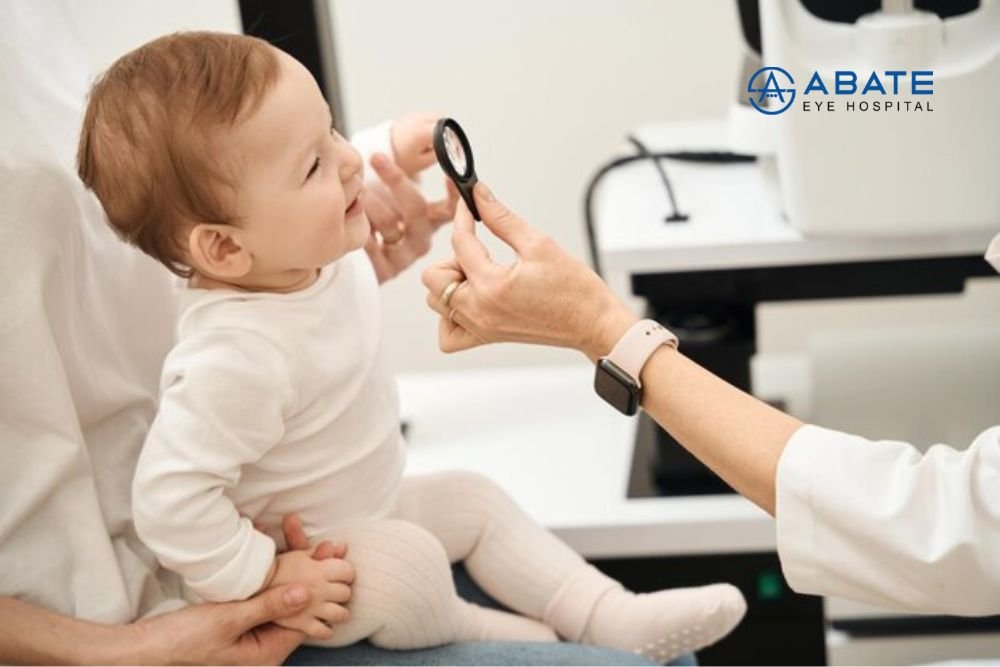
A baby’s vision begins developing from the moment they are born and continues to evolve during the first few years of life. Proper infant eye care plays a crucial role in ensuring healthy visual development, early detection of eye problems, and long-term eye health.
Many parents assume that eye care becomes important only when children start school. However, the foundation for good vision is built much earlier. Understanding how to care for your baby’s eyes and recognising early signs of concern can make a significant difference.
Vision is essential for a baby’s overall growth and development. It supports learning, coordination, and interaction with the environment.
In the early months, a baby’s eyes are still developing. Any untreated issue during this stage can affect visual development and may lead to long-term complications.
Early eye care helps:
Understanding how vision develops helps parents know what to expect.
If these milestones are not met, it may indicate a vision issue.
Infants can develop several eye conditions, some of which require medical attention.
One of the most common issues in babies.
Symptoms:
Most cases resolve naturally, but some may need treatment.
The eyes do not align properly.
Symptoms:
Early treatment is important to prevent vision problems.
Occurs when one eye develops weaker vision.
Causes:
Early diagnosis improves treatment success.
A clouding of the eye’s lens present at birth.
Symptoms:
Requires immediate medical attention.
A condition affecting premature babies.
Risk Factors:
Regular screening is essential for early detection.
Parents should watch for early warning signs.
If any of these signs are noticed, an eye specialist should be consulted.
Taking simple steps at home can help maintain your baby’s eye health.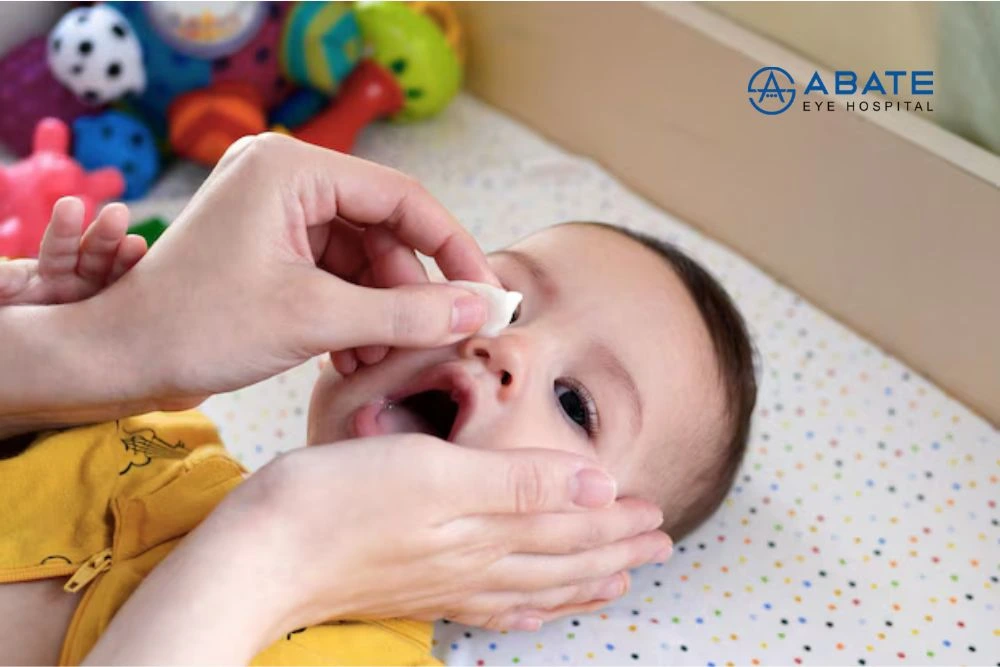
Gently clean your baby’s eyes with a soft, clean cloth to remove any discharge.
For blocked tear ducts, a gentle massage as advised by a doctor can help improve drainage.
Avoid exposing babies to very bright light. Use soft lighting to protect their eyes.
Show colourful toys and objects to help develop visual skills.
Avoid screen exposure for infants, as it can affect developing vision.
Wash your hands before touching your baby’s eyes to prevent infections.
Eye checkups should begin early, even if no symptoms are visible.
Additional checkups may be required if risk factors are present.
Eye examinations for infants are safe, quick, and painless.
Doctors may:
These tests help detect problems early.
Treatment depends on the specific condition.
In some cases, surgery may be required for:
Early treatment ensures better outcomes.
Parents play a key role in monitoring and supporting their child’s vision.
Early action can prevent long-term vision problems.
At Abate Eye Hospital, we have the best pediatric ophthalmologist in Kerala, and Chennai is designed to support infants and young children. The hospital is equipped with child-friendly diagnostic tools and experienced pediatric eye specialists who understand how to examine and treat young patients with care.
Comprehensive eye evaluations are conducted to detect conditions early and provide appropriate treatment. From routine checkups to advanced care, every step is focused on ensuring healthy vision development.
Abate Eye Hospital offers accessible and reliable eye care for infants, supported by modern technology and expert medical teams.
While not all eye conditions can be prevented, early detection and proper care can reduce risks.
You can choose a pediatric ophthalmologist in Calicut, Malappuram, Kannur, or Chennai from Abate Eye Hospital, avoiding future complications. Like all other branches, we have the best department for pediatric ophthalmology in Chennai.
Infant eye care is an essential part of a child’s overall development. Healthy vision supports learning, coordination, and growth from an early stage. Since many eye conditions do not show obvious symptoms, regular eye checkups and parental awareness are crucial.
With proper care, early diagnosis, and expert guidance, most infant eye problems can be managed effectively. If you notice any unusual signs or have concerns about your baby’s vision, consulting an eye specialist can help ensure a healthy visual future.

Oct 17, 2026

Oct 8, 2026