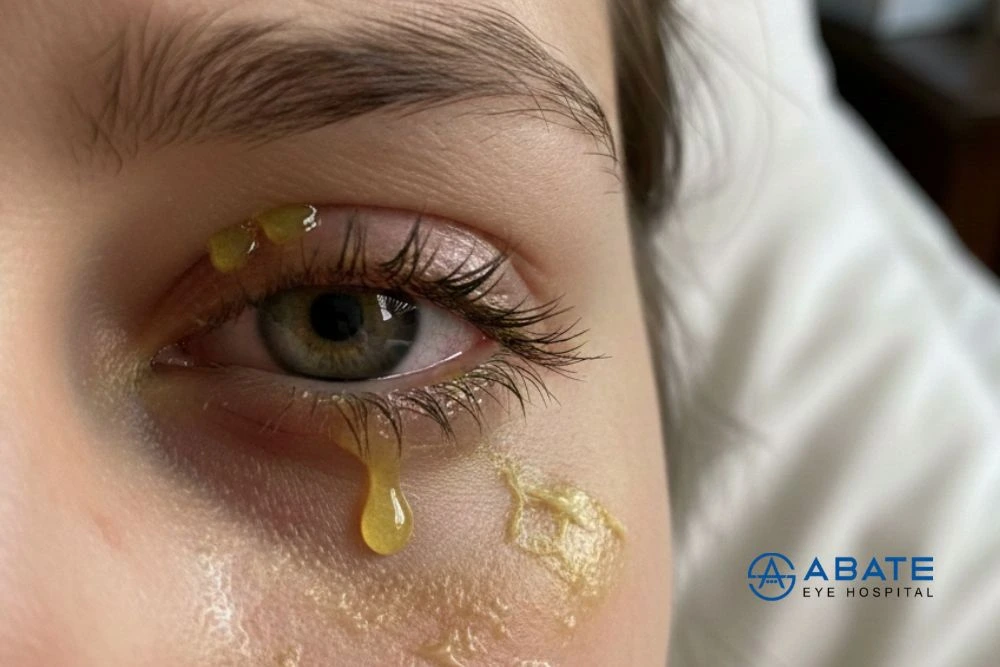
Eye discharge is commonly known as eye mucus, gunk, or rheum. It is something most people experience at some point. A small amount of clear or whitish discharge, especially when waking up, is usually normal. But heavy, thick, or persistent eye discharge often signals an underlying problem that needs attention.
This blog explains the causes of heavy eye discharge, related symptoms, home care tips, and when it’s important to visit an eye specialist. Get expert guidance from Abate, the best eye hospital in Kerala.
Eye discharge is a mix of oil, skin cells, debris, and tears that collect at the corners of your eyes. It helps remove irritants from the surface of the eye. However, when the discharge becomes heavy, sticky, yellow, green, or foul-smelling, it usually indicates inflammation or infection.
One of the most common reasons for heavy discharge is conjunctivitis.
There are three types:
Bacterial infections need antibiotic drops, while viral and allergic types require supportive care. You can use home remedies for removing pink eye.
Blepharitis is inflammation of the eyelids caused by bacteria, clogged oil glands, or skin conditions.
Symptoms include:
Regular lid hygiene is the key treatment.
When your eyes do not produce enough tears or produce poor-quality tears, mucus strands may accumulate and cause discomfort.
Severe dry eye can lead to:
Pollen, dust, pet dander, and pollution can trigger allergies that stimulate mucus production.
Symptoms include:
When the tear duct is blocked, tears and mucus cannot drain properly, leading to:
This is especially common in babies but can happen at any age.
Improper lens hygiene or overwear can irritate your eyes and increase discharge. In some cases, it can cause serious infections like corneal ulcers. If you are looking for a safe contact lens fitting, Abate Eye Hospital is a recommended option.
This is an emergency condition caused by infection or injury.
Symptoms include:
Immediate treatment is crucial to prevent vision loss.
If symptoms worsen or affect vision, seek professional care immediately.
These steps help with mild irritation but should not replace professional treatment:
If symptoms persist beyond 24–48 hours, it’s time to consult an eye specialist.
Visit an ophthalmologist if you experience:
Persistent or unusual eye discharge may point to infections, allergies, dry eye disease, or more serious eye conditions. At Abate Eye Hospital, experienced eye specialists in Chennai and Kerala, supported by advanced diagnostic tools, provide accurate evaluation and effective treatment for all types of eye discharge and related eye diseases. With branches across Malappuram, Calicut, Kannur, and Chennai, Abate ensures accessible and expert eye care for every patient.

Oct 19, 2026

Oct 17, 2026