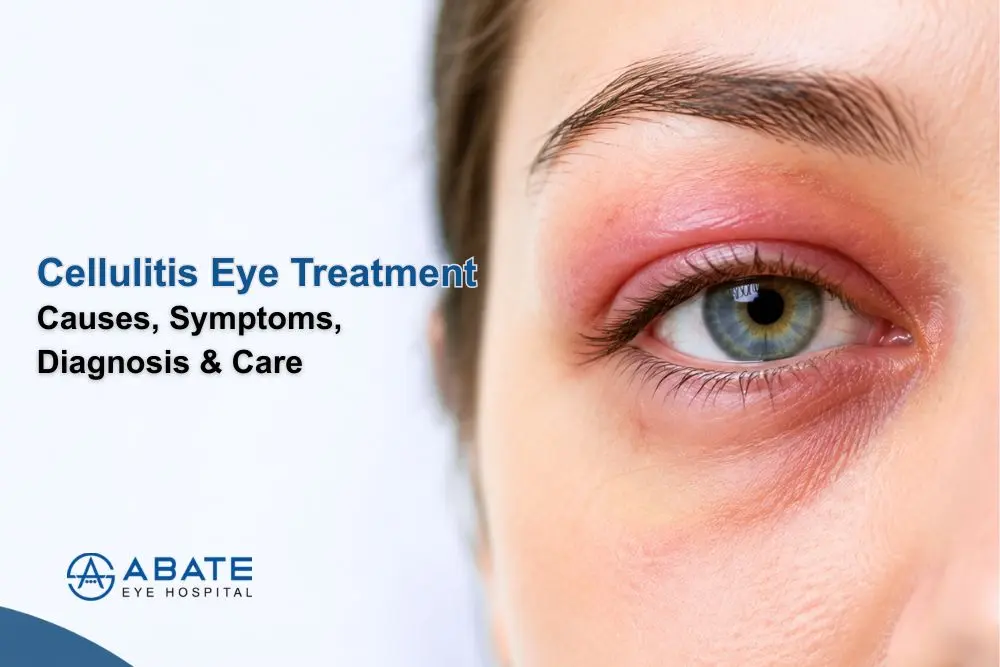
Eye cellulitis is an infection affecting the tissues around the eye. It can cause swelling, redness, tenderness, and discomfort around the eyelids. In some cases, the infection can spread deeper into the eye socket, causing orbital cellulitis, which requires urgent medical treatment. By reading this blog from Abate Eye Hospital, you’ll learn everything you need to know about eye cellulitis, including its causes, symptoms, diagnosis, treatment, and care.
Because infections around the eye can sometimes progress quickly, early evaluation by an ophthalmologist is important, particularly when there is pain with eye movement, vision changes, or significant swelling.
Eye cellulitis is generally divided into two types:
Preseptal, or periorbital, cellulitis affects the tissues in front of the orbital septum, mainly involving the eyelid and surrounding skin.
It commonly causes:
In uncomplicated preseptal cellulitis, vision and eye movements are generally preserved.
Orbital cellulitis affects the tissues behind the orbital septum and within the eye socket. It is more serious than preseptal cellulitis and can threaten vision if treatment is delayed.
Symptoms may include:
Orbital cellulitis is considered an ophthalmic emergency and requires prompt medical assessment.
Eye cellulitis can develop when bacteria spread from nearby areas or enter through damaged skin.
Common causes and risk factors include:
Sinusitis is a particularly common source of orbital cellulitis because the sinuses are located close to the eye socket.
The symptoms can vary depending on whether the infection is preseptal or orbital.
Common symptoms include:
Symptoms such as pain when moving the eye, bulging of the eye, double vision, restricted eye movement, or reduced vision may indicate orbital involvement and require urgent assessment.
An ophthalmologist will examine the eye and surrounding tissues and assess vision, eye movements, pupil responses, and other signs of orbital involvement.
If orbital cellulitis is suspected, imaging such as a CT scan or MRI may be recommended. Imaging can help identify infection within the orbit, sinus involvement, an abscess, or other complications.
The doctor may also consider the patient's recent history, including sinus infections, injuries, dental problems, insect bites, previous surgery, and other infections.
The treatment depends on the type and severity of the infection.
Antibiotics are the main treatment for bacterial cellulitis around the eye. For suitable cases of preseptal cellulitis, oral antibiotics may be prescribed after orbital cellulitis has been excluded. More severe infections may require hospitalisation and intravenous antibiotics.
The choice of antibiotic depends on factors such as the suspected source of infection, severity, age, medical history, and local bacterial resistance patterns. Patients should take antibiotics only as prescribed by their doctor.
Orbital cellulitis generally requires hospital-based treatment with intravenous antibiotics and close monitoring. Doctors may involve ophthalmology, ENT, infectious disease, or other specialists depending on the source and severity of the infection.
Not every patient with orbital cellulitis needs surgery. However, a procedure may be required if there is an orbital or subperiosteal abscess, a foreign body, vision compromise, or inadequate response to appropriate antibiotic treatment. Surgery may involve draining an abscess or treating an infected sinus.
Yes. Orbital cellulitis can affect vision, particularly when inflammation or infection puts pressure on the optic nerve or other structures within the orbit.
Reduced vision, changes in colour vision, bulging of the eye, or pain with eye movement should not be ignored. Prompt treatment is important because serious complications can include optic nerve damage, vision loss, and spread of infection to structures around the brain.
Seek urgent medical attention if swelling around the eye is accompanied by:
These symptoms can indicate orbital involvement or another serious condition requiring immediate assessment.
Eye cellulitis should not be self-treated with home remedies or leftover antibiotics. Because preseptal and orbital cellulitis can initially look similar, a medical examination may be needed to determine how deep the infection has spread.
If the infection is confirmed, follow the treatment prescribed by your doctor and complete the medication as directed.
Not every case can be prevented, but some precautions may reduce the risk:
If you develop swelling, redness, pain, or other signs of infection around the eye, an ophthalmologist can evaluate the condition and determine the appropriate treatment.
At Abate Eye Hospital, patients can receive the best eye care in Kannur, Malappuram, Calicut and Chennai for conditions affecting the eyelids, eye socket, and surrounding tissues. The treatment approach depends on the underlying cause and severity of the infection.
Early assessment is particularly important when symptoms suggest possible orbital involvement or changes in vision.
Recovery time varies depending on whether the infection is preseptal or orbital, its severity, the underlying cause, and how quickly treatment begins. Your doctor can provide a more specific estimate after examining you.
Preseptal cellulitis can often be treated effectively when diagnosed and treated appropriately. Orbital cellulitis is more serious because infection can affect vision and may spread to nearby structures. Prompt treatment is important.
Severe orbital cellulitis can cause complications that threaten vision, including optic nerve involvement. Early diagnosis and appropriate treatment help reduce the risk of serious complications.
Yes. Infection from the paranasal sinuses, particularly the ethmoid sinuses, can spread to the tissues around the eye and cause orbital cellulitis.
Yes, particularly if the swelling is associated with pain, redness, fever, vision changes, double vision, eye movement problems, or rapid progression. These symptoms need prompt medical assessment.
Cellulitis around the eye should not be ignored. While preseptal cellulitis affects the tissues around the eyelid, orbital cellulitis involves deeper tissues within the eye socket and can become vision-threatening.
Treatment usually involves appropriate antibiotics, while severe cases may require hospitalisation, imaging, intravenous medication, or surgery when complications such as an abscess occur. If you experience significant swelling, pain with eye movement, bulging of the eye, or changes in vision, seek urgent ophthalmic care.