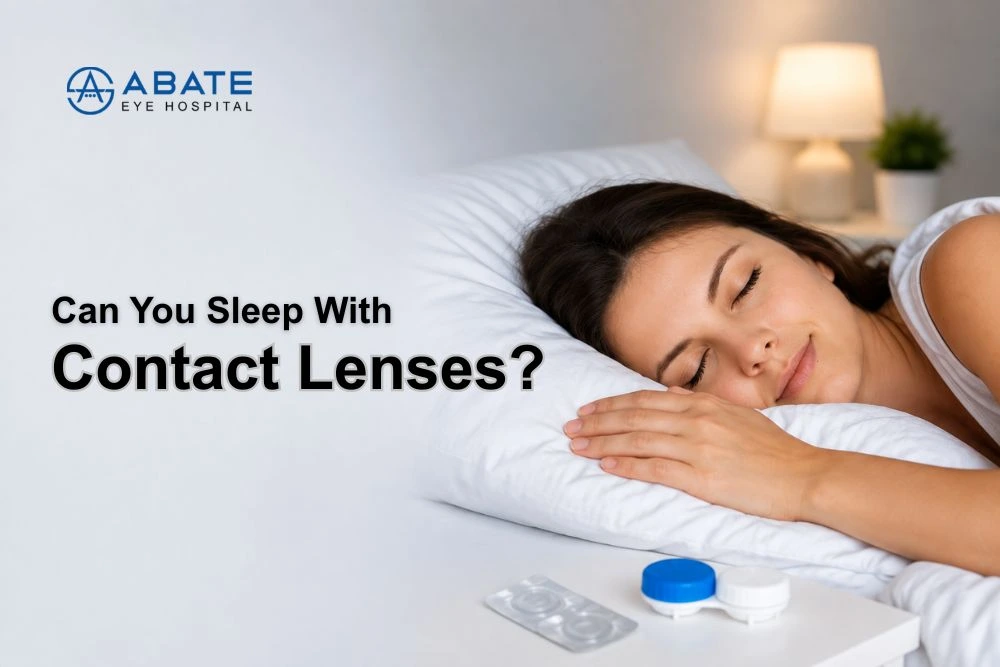
Contact lenses offer a convenient and comfortable alternative to glasses, helping millions of people enjoy clear vision every day. However, one of the most common questions among contact lens users is: Can you sleep with contact lenses?
Whether you've accidentally fallen asleep with your lenses or are considering wearing them overnight, it's important to understand the risks. Sleeping in contact lenses can reduce the amount of oxygen reaching your eyes, increasing the chances of infections, irritation, and other serious eye complications.
In this guide, we'll explain whether it's safe to sleep with contact lenses, the possible risks, what to do if you accidentally sleep with them, and how to protect your eye health.
In most cases, no. Unless your eye doctor has specifically prescribed extended-wear contact lenses designed for overnight use, you should remove your contact lenses before sleeping.
Even if your lenses are approved for overnight wear, sleeping in them still carries a higher risk of eye infections compared to removing them before bed.
Your cornea (the clear front surface of the eye) does not have blood vessels. Instead, it receives oxygen directly from the air.
When your eyes are closed during sleep, oxygen levels naturally decrease. Wearing contact lenses while sleeping further limits oxygen reaching the cornea, making it more vulnerable to irritation and infection.
This reduced oxygen supply can affect the eye's natural healing process and increase the risk of complications.
One of the biggest risks is developing a bacterial, fungal, or parasitic eye infection.
Sleeping with contact lenses increases the chance that harmful microorganisms can become trapped between the lens and the eye.
Symptoms include:
Some infections can become serious if not treated promptly.
A corneal ulcer is an open sore on the cornea that may develop due to infection.
It is considered an eye emergency and can lead to permanent vision loss if left untreated.
Sleeping with contact lenses may reduce tear circulation around the eye.
This can cause:
Reduced oxygen supply can cause blood vessels to enlarge, making your eyes appear red and irritated.
Many people experience temporary blurred vision after sleeping with contact lenses because the cornea becomes swollen.
If blurred vision continues after removing the lenses, consult an eye specialist.
Limited oxygen can cause swelling of the cornea (corneal oedema), resulting in discomfort and temporary vision changes.
Accidentally falling asleep with your contact lenses once does not always lead to serious problems.
However, when you wake up, you may notice:
Avoid pulling the lenses out immediately if they feel stuck.
Instead:
If discomfort continues, avoid wearing contact lenses and visit an eye doctor.
Even short naps can reduce oxygen reaching your cornea.
Although a brief nap is less risky than sleeping overnight, eye specialists generally recommend removing contact lenses before sleeping whenever possible.
Some extended-wear contact lenses are approved for overnight use under professional supervision.
However, studies have shown that even these lenses carry a higher risk of infection compared to removing lenses every night.
Only wear lenses overnight if your ophthalmologist specifically recommends them.
You may be at greater risk if you:
Proper hygiene significantly reduces the risk of complications.
Seek medical attention if you experience:
These symptoms may indicate a serious eye infection.

Healthy contact lens habits help protect your eyes.
Unless prescribed otherwise, always remove your lenses before going to bed.
Always wash and dry your hands before handling contact lenses.
Use only the cleaning solution recommended by your eye care professional.
Never use tap water.
Daily, bi-weekly, and monthly lenses should be replaced exactly as instructed.
Do not wear lenses beyond their recommended replacement period.
Lens cases should be replaced approximately every three months.
Sharing lenses can spread bacteria and increase infection risk.
Regular eye examinations help ensure your lenses continue to fit properly and your eyes remain healthy.
Most contact lens wearers should have an eye examination once every year, or as recommended by their ophthalmologist.
Proper contact lens use starts with expert guidance and regular eye examinations. At Abate Eye Hospital, experienced ophthalmologists evaluate your eye health, recommend the most suitable contact lenses, and provide personalized advice on safe lens wear and maintenance.
Whether you are looking for an eye specialist in Kerala, a trusted eye hospital in Kozhikode, an advanced eye care hospital Kannur, a reliable Malappuram eye hospital, or the best eye care in Chennai, Abate Eye Hospital offers comprehensive vision assessments, contact lens fittings, and treatment for contact lens-related eye problems using advanced diagnostic technology.
Follow these simple habits to keep your eyes healthy:
Sleeping with contact lenses may seem harmless, but it significantly increases the risk of eye infections, corneal ulcers, dry eyes, and other complications. Unless your eye doctor has prescribed extended-wear lenses, it's always safest to remove your contact lenses before going to bed.
Practising good lens hygiene and attending regular eye examinations can help protect your vision and keep your eyes healthy. If you experience redness, pain, or blurred vision after sleeping in your lenses, consult an eye specialist promptly.
No. Daily contact lenses should always be removed before sleeping and discarded after use.
Use lubricating eye drops, wait until the lenses move freely, then remove them gently. If symptoms persist, consult an ophthalmologist.
Although rare, severe untreated eye infections caused by sleeping in contact lenses can lead to permanent vision loss.
Even short naps can reduce oxygen to the cornea. Removing your lenses before sleeping is always the safer option.
Practice proper hand hygiene, clean your lenses correctly, replace them on schedule, avoid sleeping in them, and attend regular eye examinations.