Cataracts are one of the leading causes of vision impairment worldwide, particularly among older adults. As the natural lens of the eye becomes cloudy, vision gradually becomes less clear, making everyday activities such as reading, driving, and recognising faces more challenging.
Many people assume cataracts only cause blurry vision, but the condition can affect eyesight in several ways. It may reduce colour perception, increase sensitivity to glare, cause double vision in one eye, and make it difficult to see in dim lighting. Since cataracts develop slowly, many individuals may not notice the changes until the condition begins to interfere with daily life.
This guide by Abate Eye Hospital explains how cataracts affect vision, the symptoms to watch for, available treatment options, and when to consult an eye specialist.
A cataract is the clouding of the eye's natural lens. The lens sits behind the iris (the colored part of the eye) and focuses light onto the retina to produce clear vision.
A healthy lens is transparent, allowing light to pass through easily. When a cataract develops, proteins within the lens begin to break down and clump together, making the lens cloudy. This blocks or scatters light entering the eye, resulting in blurred and distorted vision.
Cataracts usually develop gradually and can affect one or both eyes.
Before understanding how cataracts affect vision, it's helpful to know how healthy vision works.
Normally:
When the lens becomes cloudy due to a cataract, light cannot pass through clearly, causing vision to become blurred or dim.
Cataracts affect vision in several ways, and symptoms usually worsen as the condition progresses.
Blurred vision is often the earliest and most noticeable symptom of cataracts.
People may feel as though they are looking through:
Prescription glasses may provide only temporary improvement because the clouding is inside the eye's lens.
As cataracts progress, vision may appear cloudy or hazy throughout the day.
Objects lose sharpness, making reading, watching television, or recognising faces more difficult.
Night vision is commonly affected.
People may experience:
Night driving often becomes one of the first daily activities that patients find difficult.
Cloudy lenses scatter incoming light.
This may cause:
Many patients notice that bright lights seem much stronger than before.
Cataracts may cause circular rings or halos around lights, especially at night.
These halos can make:
The natural lens gradually becomes yellow as cataracts develop.
This changes colour perception, making colours appear:
White objects may even appear yellowish.
People with cataracts often find themselves changing their glasses frequently.
Despite new prescriptions, vision may continue to worsen because the cloudy lens, not the glasses, is causing the problem.
Some cataracts may cause monocular double vision, where a person sees two images with one eye open.
Unlike neurological double vision, this symptom usually disappears when the affected eye is closed.
Contrast sensitivity helps distinguish objects from their background.
With cataracts:
Reduced contrast increases the risk of falls, especially among older adults.
If left untreated for many years, cataracts can become very dense and significantly reduce vision.
Although cataracts rarely cause complete blindness in developed healthcare settings, advanced cataracts can severely impair daily activities.
Fortunately, cataract-related vision loss is usually reversible with surgery.
Cataracts generally develop slowly.
Some people notice changes over several years, while others experience faster progression depending on:
Regular eye examinations help monitor progression.
These develop in the center of the lens.
Symptoms include:
These begin around the edges of the lens.
Symptoms include:
These develop at the back of the lens.
They often cause:
Posterior subcapsular cataracts tend to affect vision earlier than other types.
Several factors increase the likelihood of developing cataracts.
These include:
Maintaining good overall health may help slow cataract progression.
Schedule a comprehensive eye examination if you notice:
Early diagnosis allows timely treatment before vision becomes severely affected. You can choose the best cataract surgeon in Chennai or Kerala from Abate Eye Hospital. At Abate, you will get advanced cataract care.
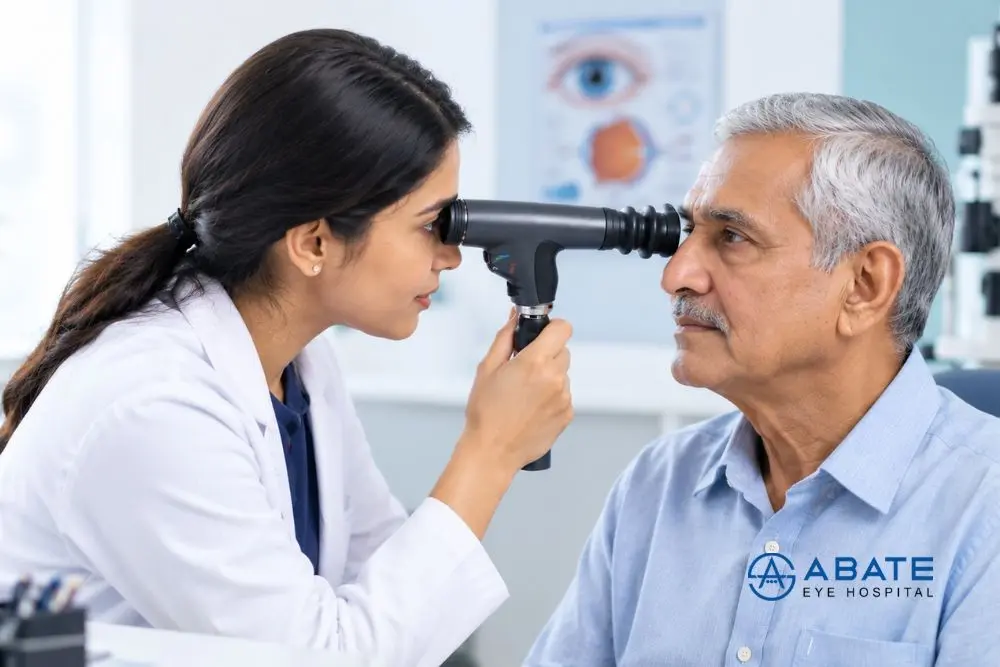
Eye specialists diagnose cataracts through a comprehensive eye examination.
This may include:
These tests help determine the severity of the cataract and identify any other eye conditions.
During the early stages, updated glasses or brighter lighting may temporarily improve vision.
However, as cataracts progress, glasses cannot remove the cloudiness inside the lens.
When cataracts begin affecting daily activities, surgery becomes the most effective treatment.
Cataract surgery is one of the safest and most commonly performed eye procedures.
During surgery:
Most patients experience significant improvement in vision after recovery.
The procedure is typically performed as day-care surgery, allowing patients to return home the same day.
Recovery is usually smooth with proper post-operative care.
Most patients notice:
The eye continues healing over the following weeks as instructed by the surgeon.
Although aging cannot be prevented, healthy habits may reduce the risk or delay progression.
Many cataracts develop gradually without causing immediate symptoms.
Routine eye examinations help:
Early diagnosis supports better visual outcomes.
At Abate Eye Hospital in Chennai and Kerala, cataract care is provided by experienced ophthalmologists using advanced diagnostic technology and modern surgical techniques. Every patient undergoes a detailed eye examination to determine the severity of the cataract and the most suitable treatment approach.
The hospital offers:
With advanced eye care facilities across Kerala and Chennai, Abate Eye Hospital is committed to helping patients regain clearer vision through safe and effective cataract treatment.
Cataracts gradually affect vision by causing blurriness, glare, poor night vision, faded colours, and reduced visual clarity. While these changes develop slowly, they can significantly impact daily activities if left untreated.
Fortunately, cataracts can be effectively treated with modern cataract surgery, restoring clear vision and improving quality of life. If you notice any changes in your eyesight, schedule a comprehensive eye examination with an experienced ophthalmologist for early diagnosis and appropriate treatment.
Cataracts cloud the eye's natural lens, causing blurred vision, glare, poor night vision, faded colors, and difficulty focusing.
Untreated advanced cataracts can lead to severe vision loss, but cataract-related blindness is generally reversible with surgery.
Yes. Cataracts often develop in both eyes, although one eye may be affected earlier or more severely.
Glasses may help during the early stages, but they cannot remove the cloudy lens. Cataract surgery is the definitive treatment.
Cataract surgery is usually recommended when vision problems begin interfering with daily activities such as reading, driving, or working.