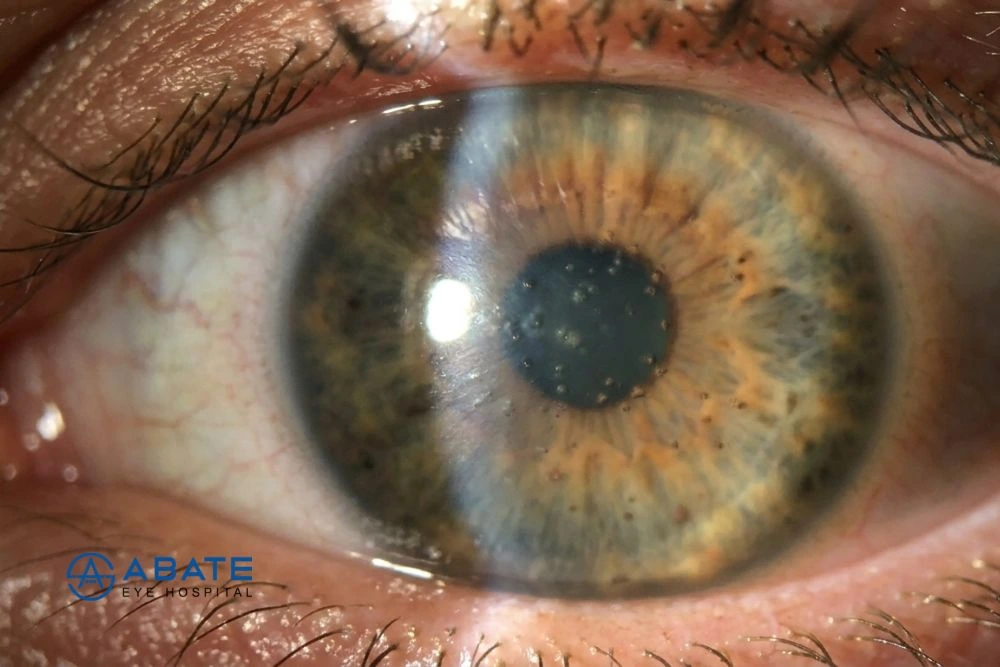
Fuchs’ dystrophy is a progressive eye condition that affects the cornea and gradually impacts vision. It develops when the inner layer of the cornea, known as the endothelium, begins to lose its ability to regulate fluid. As a result, fluid builds up in the cornea, causing swelling, cloudiness, and blurred vision.
This condition often develops slowly and may not show noticeable symptoms in its early stages. However, as it progresses, it can significantly affect daily activities such as reading, driving, and working. Understanding Fuchs’ dystrophy, its symptoms, and available treatment options is essential for maintaining long-term eye health.
Fuchs’ dystrophy is a type of corneal dystrophy that affects the endothelial cells of the cornea. These cells are responsible for pumping excess fluid out of the cornea to keep it clear and maintain proper vision.
When these cells gradually deteriorate, the cornea becomes swollen due to fluid accumulation. This swelling reduces transparency and causes blurred or distorted vision. Over time, the condition may worsen, leading to discomfort and visual impairment.
Fuchs’ dystrophy usually affects both eyes and tends to appear after the age of 40, although early changes may begin much earlier.
The exact cause of Fuchs’ dystrophy is not always known, but several factors contribute to its development.
Fuchs’ dystrophy often runs in families. If a close family member has the condition, the risk of developing it is higher.
The disease is commonly associated with aging. As the body ages, endothelial cells naturally decrease in number, and in Fuchs’ dystrophy, this loss happens at a faster rate.
Studies show that Fuchs’ dystrophy is more common in women than men.
Certain eye surgeries, such as cataract surgery, may accelerate the progression in individuals who already have early signs of the condition.
Symptoms usually develop gradually and may vary depending on the stage of the disease.
Morning vision is often worse because fluid accumulates in the cornea overnight when the eyes are closed.
In advanced stages, the condition can significantly affect visual clarity and quality of life.
The cornea must remain clear for light to pass through properly. In Fuchs’ dystrophy, fluid buildup causes swelling, making the cornea thick and cloudy.
This affects the way light enters the eye, leading to:
Over time, untreated swelling can damage the corneal surface and lead to pain.
You should consult an eye specialist if you experience:
Early diagnosis allows better management and helps slow disease progression. You can see an eye specialist in Kerala at Abate Eye Hospital for advanced diagnosis.
A comprehensive eye examination is required to diagnose the condition accurately.
This allows the doctor to examine the cornea and detect characteristic changes such as guttae (small bumps on the cornea).
Measures corneal swelling caused by fluid buildup.
Evaluates endothelial cell count and function.
Determines the extent of vision impairment.
Accurate diagnosis helps determine the stage of the disease and guide treatment.
Treatment depends on how advanced the condition is and how much it affects vision.
In early stages, symptoms can often be managed with non-invasive methods.
Help reduce discomfort and improve surface moisture.
Draw excess fluid out of the cornea and reduce swelling.
Using a hairdryer at a safe distance may help evaporate excess moisture from the cornea.
These methods provide relief but do not stop the progression of the disease.
When symptoms become severe and vision is significantly affected, surgical intervention may be required.
This is the most advanced and commonly performed procedure for Fuchs’ dystrophy.
DMEK (Descemet Membrane Endothelial Keratoplasty) is a more refined version with excellent results.
In severe cases, the entire cornea may need to be replaced.
Although effective, this procedure has a longer recovery time compared to modern techniques.
Recovery depends on the type of treatment.
Patients are usually advised to:
Most patients experience significant improvement in vision after successful treatment.
At Abate Eye Hospital, advanced diagnostic technologies are used to detect and monitor corneal conditions like Fuchs’ dystrophy at an early stage. Experienced ophthalmologists carefully evaluate each patient to determine the most suitable treatment approach.
The hospital offers modern corneal treatment options, including advanced endothelial keratoplasty procedures. With a focus on precision, safety, and long-term outcomes, patients receive personalised care tailored to their specific condition.
Consult a cornea specialist in Kerala or Chennai at Abate, and enjoy personalized treatment, accurate diagnosis, and improved vision outcomes with advanced corneal care.
Fuchs’ dystrophy cannot be completely prevented, especially when it is inherited. However, early detection and proper management can slow its progression and reduce complications.
Consistent care helps maintain better vision over time.
Fuchs’ dystrophy is a progressive corneal condition that can significantly affect vision if left untreated. While it cannot be completely cured, modern treatment options offer effective ways to manage symptoms and restore visual clarity.
Early diagnosis, regular monitoring, and timely intervention play a key role in preserving eye health. If you experience symptoms such as blurred vision or light sensitivity, consulting an eye specialist can help ensure proper care and better outcomes.